


Blocking Basics: Why It Matters (Even for Headbands)
If you’ve been in the knitting world for more than five minutes, you’ve definitely heard the word blocking tossed around like it’s some sort of magic spell. And honestly? It kind of is.
I used to think blocking was one of those “advanced” steps that only serious knitters bothered with... you know, the people who have meticulously organized needle collections and can cable without looking.
Here I was in my own little world, working on my headbands and cowls, thinking blocking was optional. Then I finished my very first over-the-head sweater. And let me tell you… blocking is the shiz. Like, the kind of shiz that transforms your “kinda cute, slightly lumpy, is-this-even-wearable?”, project into a legit garment.
Pre and post steam blocking on the Sweater Weather Sweater by Barley & Flax.
The stitches relax, the fabric softens, and suddenly the sweater fit like it was actually made for a human body and not, say, a piece that could double as modern abstract art. It was glorious.
But here’s the thing - blocking isn’t just for sweaters. It isn’t even just for shawls or complicated lace. Blocking matters for everything. Yes, even your trusty, fire them off the needles in 30 minutes, headbands.
Why Blocking Matters (Even When Your Project Seems Simple)
1. Blocking evens out your stitches
Even if you’ve been knitting or crocheting for years, our tension naturally has a mood of its own. I've had a rough day... my stitches might just be as tightly wound as I am. A gentle bath or a good steam relaxes those stitches so they settle into place like they’ve had a long day and finally found a comfortable couch.
2. It helps your fabric behave
Cotton wants to stretch. Wool wants to bloom. Acrylic… well, acrylic wants to do its own thing. Blocking gives your fabric direction—like a coach, but for fibers.
For something like a headband, this matters more than you think. Blocking can keep it from rolling, bunching, or having that “why is there one weird corner?” effect.

3. Blocking makes your project feel finished
You put in the hours. You counted the stitches (or creatively pretended you did). You frogged that one row three times. Blocking is the final yes, I made this and I’m proud of it moment.
Water vs. Steam: Choose Your Fighter
Wet Blocking
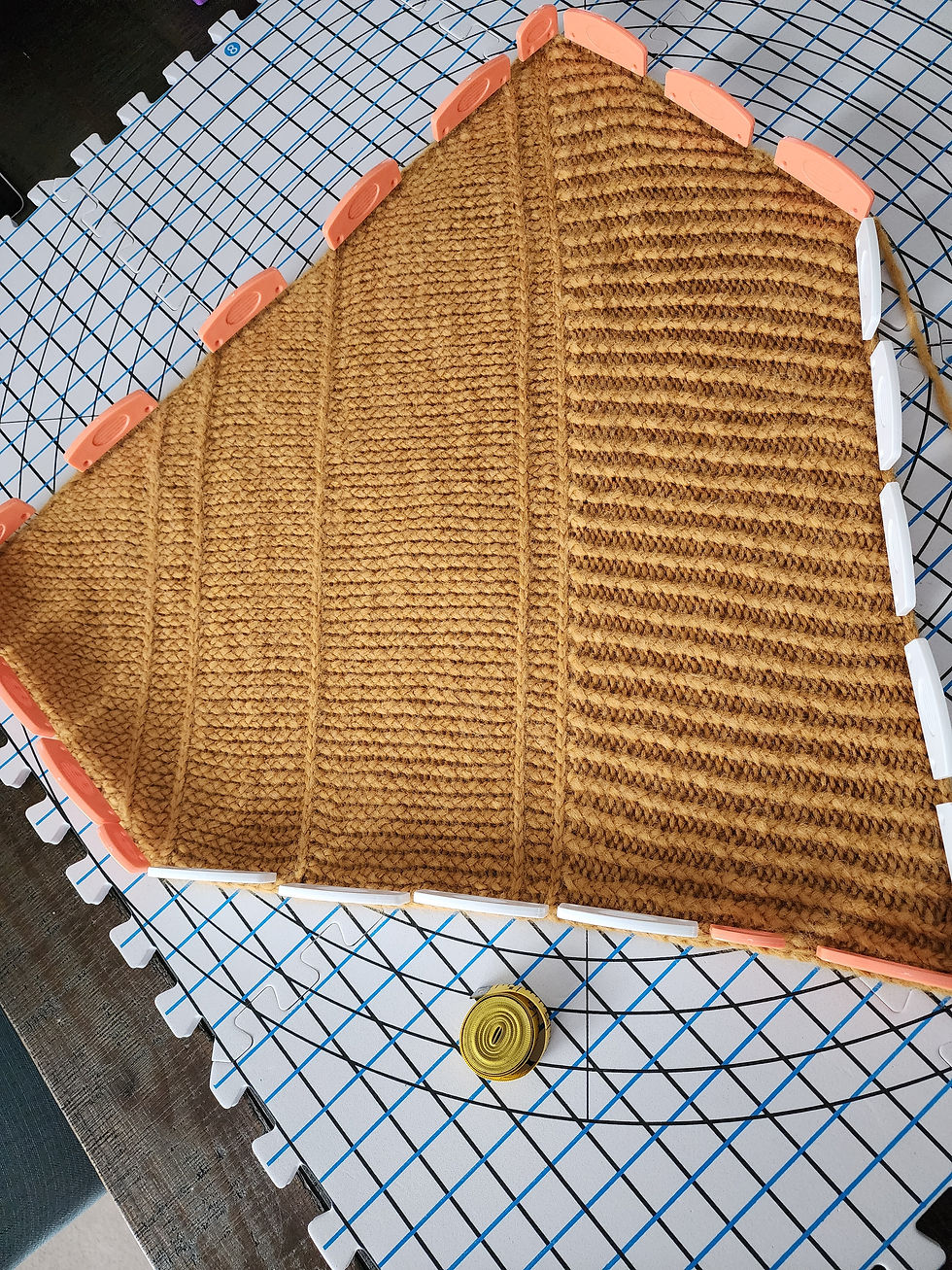
Great for natural fibers. Soak your piece, squeeze (don’t wring!) the water out, pin it to shape, and let it dry. This gives you the most dramatic transformation - like Cinderella level. But you better have some patience (and time!). This beauty took two days to dry fully.
Steam Blocking (the MMK favorite)
Quicker, when you want a little control without a full soak. Look, don’t touch.
Seriously. Acrylic + heat = danger zone.
Here are a few reasons why this is probably my favourite way of blocking:
It’s fast (and sometimes that’s everything)
Steam blocking gives you results now, not tomorrow.
It’s low-commitment blocking
Steam blocking is the “let’s see how this goes” option.
Fix a rolling edge
Relax stubborn stitches
Encourage a piece to behave
It works beautifully for finished objects
Once your ends are woven in and you’re officially done-done, steam blocking feels like the final polish. Suddenly your project looks store-ready without losing its handmade soul.
Some gentle PSAs for this one...
Never touch the iron to acrylic
Always hover
Let the steam do the work
Steam is a power tool in knitting. Respect it and it will respect you back.
No-Drama Blocking
Sometimes a light misting and a gentle reshaping does the trick. Perfect for small makes like headbands where you just need them to chill out a bit.
Blocking for Real Life Makers
Here’s the thing: blocking isn’t about perfection. It’s about giving your piece the chance to be its best self. We’re not here to stress about perfect measurements or 47 pins placed at exactly 1-inch intervals (unless that’s your jam. Hi. It's me.).

Blocking is practical magic - simple, approachable, and honestly kind of fun once you lean into it. And if you’re making to wear, to gift, or to stock your handmade shop, blocking can be the difference between, “Cute!” and “WAIT. YOU MADE THAT?!”
Final Thoughts (From Someone Who Has Seen the Light)
If you’re a newer maker - block your projects.
If you’re a seasoned maker who sighs dramatically at the idea - block your projects.
If you think headbands don’t need blocking - try it once. I dare you.
That first sweater taught me that finishing work isn’t just a step... it’s a glow-up. And once you see what blocking can do, you won’t go back.
Crafting through chaos,
Stacie


